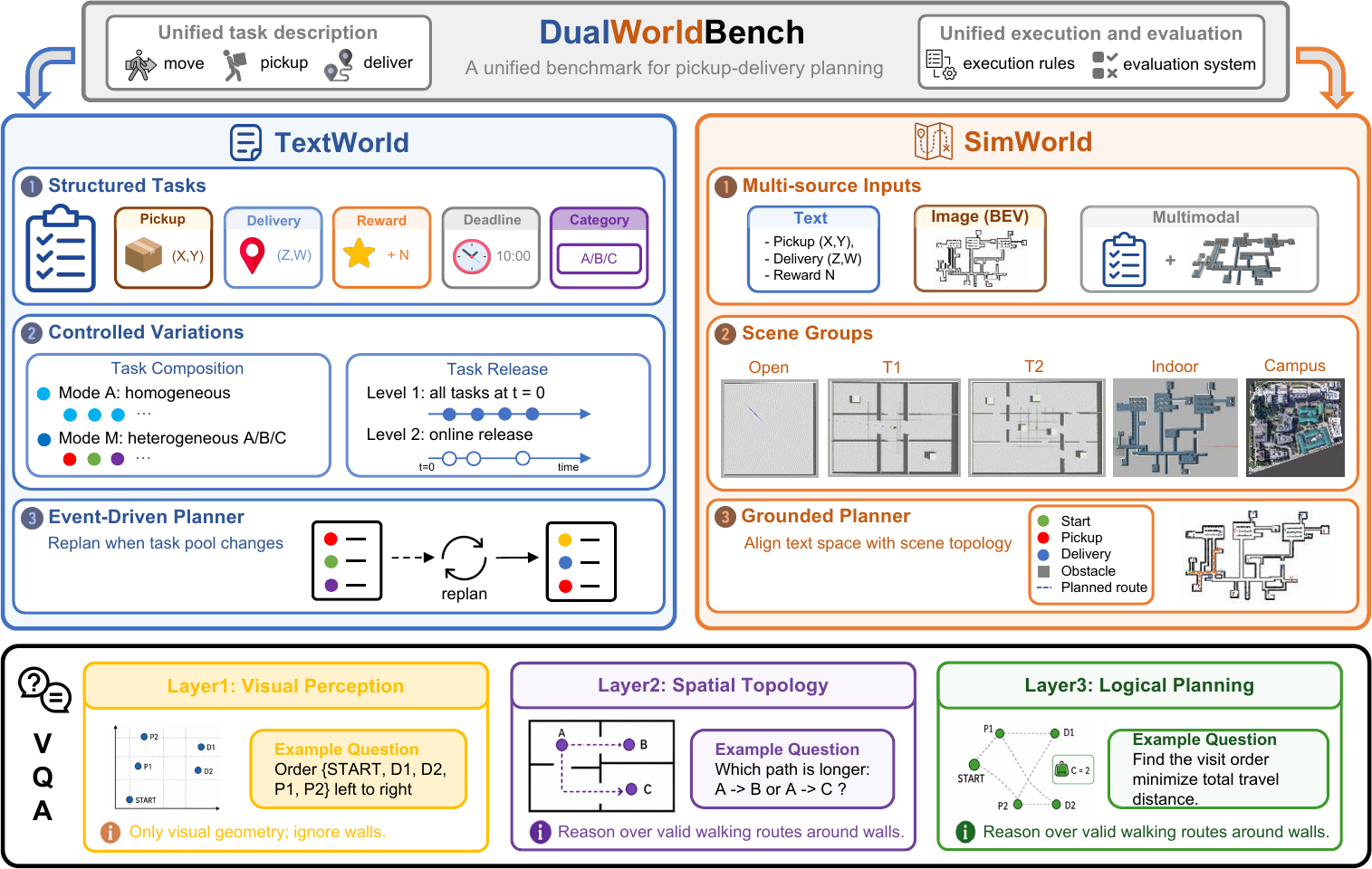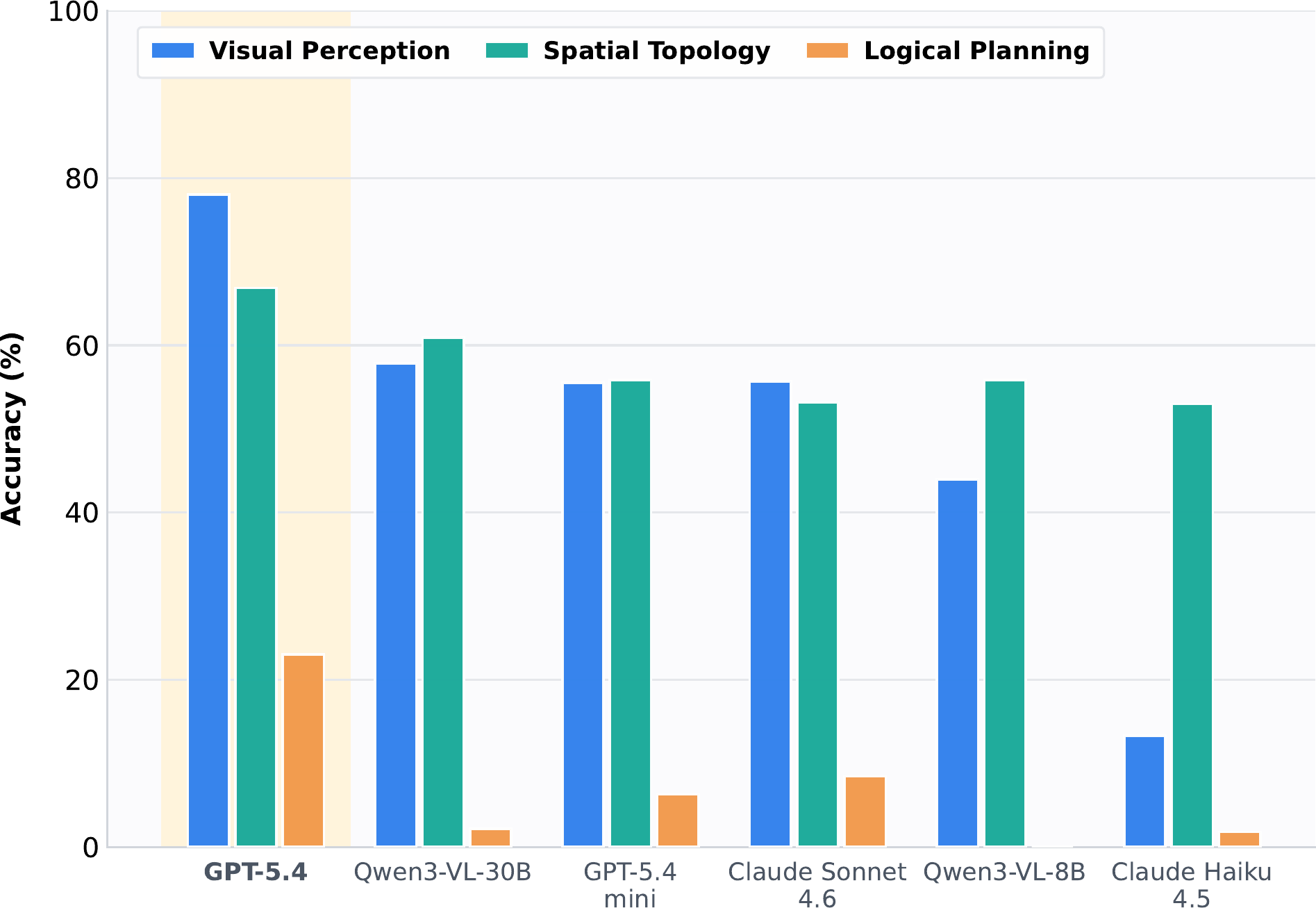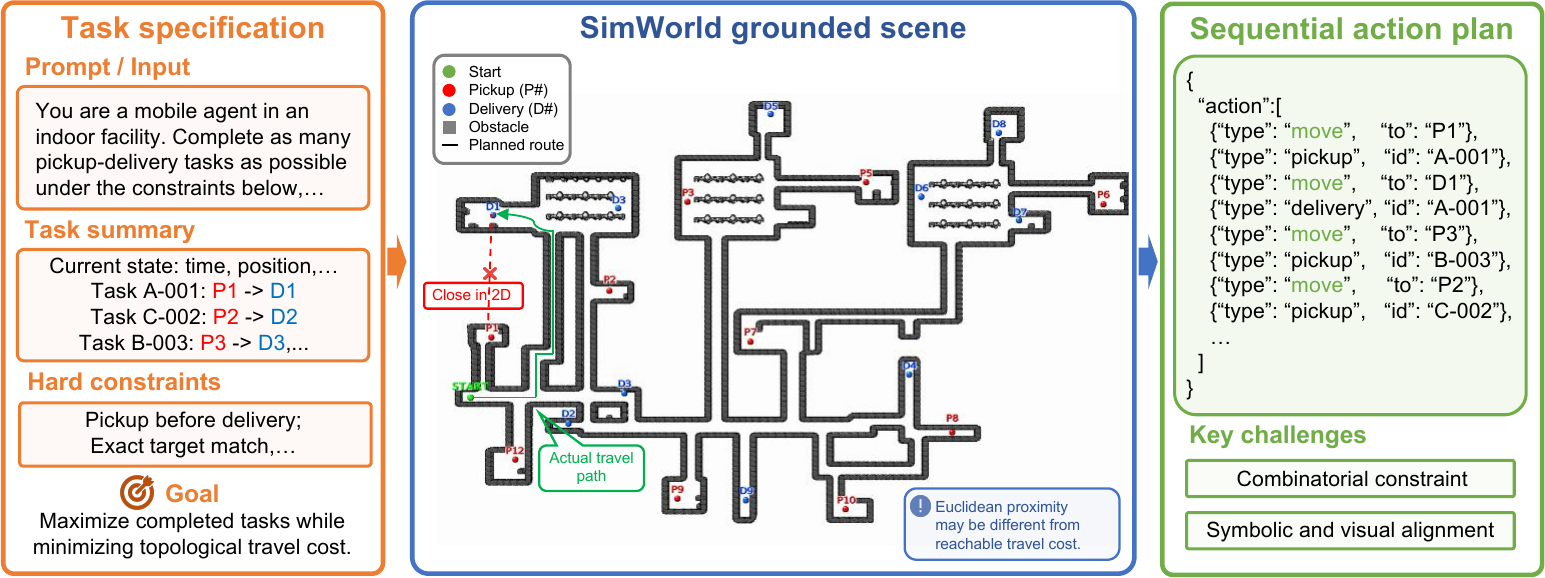
Real agents face coupled combinatorial constraints.
A delivery agent must jointly handle task order, rewards, deadlines, pickup-before-delivery precedence, capacity limits, and travel cost. This makes planning difficulty grow at the sequence level rather than as isolated subtasks, but many existing evaluations still use simplified settings with weak temporal and combinatorial pressure.